Friday, November 11, 2005

The Baby Tamia Story and other Utah adoption atrocities

NOTE: Posting dates are irrelevant here, so ignore them. This blog is designed to be read from the top down.


'A Cherished Child' - what a delightful name for an adoption agency! Wouldn't it make one assume its endeavors were aimed at bettering the lives of children entrusted to it?

As a number of Illinois famililies have learned, most painfully, agencies like 'A Cherished Child' in Utah appear far more interested in collecting the brokering fees than in the welfare of the babies they place. Ethics are cast to the four winds, as are laws designed to protect all parties to adoption.

Baby Tamia's family was one of those families. You can read Baby Tamia's heart-wrenching story on many websites - just put "Baby Tamia" into any search engine. But these first three links will get you started.

  • Black mothers targeted
  • Adoption reversed
  • Homecoming

  • In a nutshell:
    Carmen McDonald, suffering from post-partum depression and bipolar disorder, felt overwhelmed, and in a weak moment called an 800 number she found for 'A Cherished Child' to explore the possibility of placing her child for adoption.

    The next thing she knew, she and her three-month-old baby daughter were flown from her home in Illinois to Utah, where she was housed and 'counseled' in a hotel room. Within hours, she was asked to sign a relinquishment document, with just an agency representative and a hotel clerk as witnesses. When she attempted to back out, she was threatened with being left without return airfare for Baby Tamia and her, which would have left them stranded - and with no money - in Utah. Frightened and feeling alone (she hadn't informed her mother of her contact with A Cherished Child), she caved in and signed.

    What resulted was a total breakdown for Carmen. When her mother learned what had been done to her, she immediately set out to rally the support of Illinois officials, her church, and others who could help her bring Baby Tamia back to Illinois.

    The frosting on the cake was when Baby Tamia's prospective adoptive parents, with whom Tamia already had been placed, were arrested on drug charges, putting Baby Tamia in the care of Child Protective Services.

    Other victimized mothers


    The Baby Tamia case was far from unique. Because of all the media attention it garnered, it brought the nation's attention to the horrendous predator activities being carried out all over the United States by agencies operating out of Utah.

    Mary Mitchell, Chicago Sun-Times, has written a series of excellent columns on the Baby Tamia case and on the victimization of poor (and especially black) mothers by Utah predators. She gives examples of two more Illinois mothers victimized by Utah adoption brokers:

    (Summary) Eula McNulty, a 23-year-old Chicago mother of a seven-month-old, suffering from depression, saw a TV commercial for 'Adoption Center of Choice' and called the toll-free number. She was sent an e-ticket to fly to Utah, where she was assured the baby's father would be contacted. He wasn't. What's more, when McNulty left Utah after surrendering her baby, she was given an envelope with $1300 in it (ostensibly for 'expenses'). She felt terrible - as though she had sold her baby.

    Quoting Mary Mitchell from a column entitled 'Parents ensnared': McNulty is not the only poor, desperate woman who went to Utah. Another woman who is too ashamed to let her name be used took her young twins and an infant to that state. She was given $1,800 in cash, supposedly to cover her travel and meal expenses. The children's father is fighting to get them back.
  • Parents ensnared


  • Prospective adoptive parents rescue Chicago mother


    The Baby Tamia case brought to light an account of another Chicago mother, also brought to Utah by A Cherished Child, who tried to back out of relinquishing her baby. The following is an excerpt from "Tamia case an instance of déjà vu?", subtitled 'Utah parents say they had a similar adoption horror', published in the March 27, 2005, issue of The Salt Lake Tribune:

    The allegations brought back memories for the Mintzes, who say they experienced the "seamy side of adoption" firsthand.
    When their birth mother backed out, minutes before she was scheduled to deliver via Caesarean section, the Mintzes say A Cherished Child's director Ruby Johnston flew into rage.
    "She started screaming at [her] and saying, 'You can't do this. You made a deal.' She was intimidating this girl right as she was about to have this baby," said Steve Mintz, who works as a surgeon at Salt Lake Regional.
    Carolyn Mintz said, "I was devastated that we weren't bringing home a baby. But we weren't about to take a child from someone who desperately wanted her."
    Steve Mintz says Johnston apologized profusely, claiming this had never happened before, but "the OB-GYN looked at her and said, 'What about that Vietnamese girl last month?' "
    That comment triggered an "aha" moment for the couple, who decided to cut all ties with the agency.
    In McDonald's lawsuit, she claims Johnston threatened to strand her in Salt Lake City if she did not surrender her daughter. The Mintzes wonder if that happened to the birth mother they met, who also was from Chicago. They were stunned to see her weeks later, featured with her infant daughter in a Salt Lake City TV news segment about overflowing homeless shelters.
    "I don't even know if Ruby [Johnston] gave her bus fare to get back home," said Steve Mintz. "We gave her a little money and set her up with social services."
  • Tamia case an instance of déjà vu?


  • "Adoption Warehouse USA"
    That's the name Utah adoption attorney Phillip Lowery has given to his state:
  • Adoption Warehouse

  • Says Lowery in an article published on the NBC5.com website on 2/17/05: "They are inducing natural mothers to come to Utah with babies or to give birth. Adoption agencies are setting up shop, putting up ads in Yellow Pages all across the country with 800 numbers."
  • Mothers pressured

  • He claims that Utah's adoption laws are attracting ever more new agencies - thirteen licensed just in recent years.

    "Utah Laws Not Likely to Change - Mormon-controlled Legislature"
    From the Salt Lake Tribune article, "Is Utah a 'baby warehouse'?" (see Adoption Warehouse link above):

    Proposals to amend Utah adoption laws have fallen flat before the predominantly Mormon Legislature. The Church of Jesus Christ of Latter-day Saints runs 12 of the state's 37 licensed adoption agencies. A bill before the 2005 Legislature would mandate offering psychological counseling to all birth mothers. That move, or requiring a judge to sign off on all relinquishments, might prevent lawsuits like the one filed by the McDonalds, Lowry said. (Utah adoption attorney Phillip Lowry)

    Birth Fathers Lose their Children to Utah Predators

    Illinois father's rights trampled - judge orders his child returned

    Quoting from the NBC5.com article, 'Mothers Say They Felt Pressured' (link above): In another Illinois case, a hotel employee also witnessed a young Springfield mother give up her child, but that adoption was overturned. Brooks reported that an Illinois judge ordered a baby returned to the biological father after finding that the director of "A Cherished Child" encouraged the mother to refuse to name the father of the baby on the birth certificate, leave the state of Illinois for the purpose of interfering with the father's parental rights and avoid the 72-hour waiting period for taking a consent as required by Illinois law. "The agencies are running amok with the law," Lowry said. "They are taking advantage of it."

    OTHER BIRTHFATHERS
    Read Lorenzo Harrington's story - 'Judge: Baby Wade Stolen': This father participated in the mother's prenatal care and attended his child's birth. Harrington had planned to raise the child, since the mother feared losing her scholarship if she kept the baby. Instead, she contacted predatory Utah agency 'A Cherished Child', and they took over. She was flown to Utah the day she left the hospital. Her relinquishment, the next day, followed 15 minutes of counseling, and was witnessed by the agency representative and a hotel maid. And all without the father's consent - or even knowledge.
  • Judge: Baby Wade "Stolen"

  • Buddy Pruitt, of Birmingham, AL, lost his child through 'Adoption Center of Choice':
  • Buddy Pruitt vs. Adoption Center of Choice

  • Frank Osborne, of Stanley, North Carolina, has been in a pitched battle with 'Adoption Center of Choice' to recover the son he lost to adoption without his consent. Read about it in the 'N. Carolina Father Sues':
  • N. Carolina Father Sues

  • Victor Johnson, of Arizona. An excerpt from Johnson's complaint, from the court record: The complaint stated that the relevant adoption statutes of Utah are Utah Code Ann., § 78-30-4.11 et seq. It was alleged that the latter statute, as applied or on its face, without due process of law deprived Plaintiff of his fundamental right to maintain a parent-child relationship in that the statute does not require the mother to produce the name of a possible father. It was averred that a due process violation occurred also because once "actual notice of the father's right is given to the adoption agency there is no duty on the adoption agency as agent for the adoptive parents to disclose information or [provide] notice of the proceedings to the father." In connection with this alleged violation of Plaintiff's rights, the complaint cites the "Kidnapping Act 28 U.S.C. § 1738." App. at 21-22.

    Johnson lost his case, which means he lost his daughter. The agency involved? Adoption Center of Choice.
  • Baby Orozco

  • George McCormick, of Georgia, is currently fighting for the right to raise his daughter, who was taken by a Utah adoption agency the day after her birth. From an article in the November 23, 2005 online Atlantic Journal-Constitution (AJC): McCormick's case indicates that the national phenomenon of Utah adoption agencies being accused of skirting biological parents' rights has spread to Georgia.
  • George McCormick Fights for Daughter
  • George McCormick vs.'A Child's Dream'

  • Bottom line: By Utah's not requiring naming, notification or relinquishment of birth fathers, and by making it extremely difficult and costly for birth fathers to attempt to assert rights in Utah that would be legally theirs in their own states, predator agencies are licensed to literally steal children from their fathers in any state. Even married fathers have no protection. All the predators have to do is lure the mother to Utah and coach her to refuse to name the father.

    Thursday, November 10, 2005

    Agency Rakes in Money - Tax Payers and Hospitals Stuck With the Bills

    Salt Lake Tribune, March 27, 2005, 'Adoptive parents' story' (excerpt):

    Steven Mintz also wonders why taxpayers aren't outraged by Utah's laissez-faire adoption laws, noting Medicaid and hospital emergency rooms often pick up the health care tab for out-of-state mothers brought here by agencies.

    Treating such mothers puts doctors in a tough position, says Davis County obstetrician and gynecologist William Hughes.

    About a year ago on a Friday evening, Hughes was the on-call doctor when a woman arrived at a Davis County hospital in labor. He managed to track down her doctor in South Carolina and get her medical history, but was stunned when a couple showed up to adopt the baby. He also was stuck filing paperwork to convince Medicaid to pay the bill.

    "I have a patient I don't know, an adoptive couple I've never met and a lawyer who has not contacted me to make any arrangements beforehand," said Hughes. "And all we get is a malpractice suit if something goes wrong."

    "A bit unsavory": Washington, D.C.-area attorney Mark McDermott, legislative chairman for the American Academy of Adoption Attorneys, frowns on flying in mothers from other states for adoptions.

    "The reputable agencies around here don't fly birth mothers around the country like that," he said. "There's something a bit unsavory about moving them around like that."
  • Adoptive Parents' Story

  • Wednesday, November 09, 2005

    Utah agencies admit 'routinely' violating ICPC

    The Interstate Compact for the Placement of Children (ICPC), was formed at the federal level to oversee adoptions which cross state lines. Here's how it should go:

    When a child is to be placed for adoption in a state other than his state of birth, it is the responsibility of the adoption brokers in the "receiving" state to notify officials in the "sending" state (state of child's birth) of the proposed adoption. The sending state then initiates the placment process. It verifies that the parents' relinquishments, voluntary or court-ordered, have been properly executed according to its own state laws and sees to it that the parents' and child's rights are being protected in the adoption process. In turn, the receiving state verifies to the sending state that home study and other requirements of the prospective parents have been satisfied. When all the paperwork is complete, then and only then can the out-of-state agency legally take custody of the child for placement with adoptive parents.

    Not only was A Cherished Child guilty of ignoring the ICPC's procedures in Tamia's adoption attempt, but her case represented the fourth complaint to ICPC against A Cherished Child since its founding in 1997; three cases have resulted in violation findings. But the agency's attorney complained that it was being punished for doing something that was "a common practice by all agencies" in Utah. The following is an excerpt from an Associated Press article published in the Boston Globe, 'Routinely violated by agencies':

    "...adoption agency attorney Richard Van Wagoner said the agreement that is supposed to coordinate the transfer of children across state lines is routinely violated by adoption agencies. (emphasis added)

    ''A mother might back out of the decision or make a commitment and not show up," Van Wagoner said. ''So, the paperwork ends up being completed on this end. This was a technical violation, and the practice is not a secret to the state."


    A mother might back out of the decision or make a commitment and not show up?

    This was a technical violation?
    H - E - L - L - O !!!!!!
  • Routinely violated by agencies

  • What does all this mean?

    It means that Utah adoption brokers can't trust adoption professionals in other states to deliver a 'promised' baby to them because other states' safeguard standards for mothers and children are higher than their own.

    It means that in cases like Tamia's, a mother going through a difficult time emotionally and/or financially can be recruited through glitzy newspaper or phone book ads in her home state, flown to Utah, 'counseled' briefly by adoption brokers in a hotel room, and required to relinquish her child there - all within hours of her arrival.

    It means that when an adoption in Utah is to be brokered by a licensed agency (as opposed to a privately-arranged adoption), Utah law doesn't even require that the mother go to court to sign the surrender before a judge; she can sign it in a hotel room with only an agency representative and a hotel clerk as witnesses. The hotel clerk who witnessed Carmen McDonald's relinquishment signing said she has witnessed "many" such signings. "They always cry," she said.

    It means that once a mother has signed the relinquishment document, it is irreversible, even if obtained through coercion, intimidation, or - like Baby Tamia's mother - being threatened with not being given a return airline ticket home if she failed to relinquish. (One newspaper report of the Tamia case erroneously reported that a mother has 24 hours in which to change her mind. What the law actually says is that a mother has 24 hours after her child's birth to consider relinquishment before being asked to sign a surrender document.)

    Follow the links 'Mothers pressured' and 'Adoptive parents' story', above, to read about more of the unethical tactics used by representatives of A Cherished Child and other Utah agencies to obtain infants. Agency representatives have been known to become extremely angry and extremely intimidating in their efforts to get mothers to sign relinquishments.

    'Tri-state adoptions'

    Utah has become a fast track for what is being termed tri-state adoptions. In other words, not only is the baby imported from another state, but the prospective adoptive parents are from out-of-state, as well. Follow the link 'Judge: Baby Wade Stolen", above, and you'll see that the couple who tried to adopt Baby Wade (another Illinois baby) through A Cherished Child in Utah came there from Arizona.

    A discussion thread at the website of pahealthsystems.com included these posts by a prospective adoptive father:
  • Tri-state adoptions

  • Posted by Steve on 09-30-04 01:17 AM:
    Adopting in December: Has anyone ever heard of a Tri-State adoption. Where you do not finalize in the state you reside or the state you are adopting from but actualy finalize in the state of utah?? This is what we are being told to do by our agency. (emphasis added) I trust them but had just not ever heard of this until the last week or so.

    Later post from Adopting in December: The way I have been made to understand how this Tri State adoption works is that 24 hours after the birth of the baby the mother will sign papers to relinquish parental rights under the accordance of the laws of Utah. Even though she is in NY state. Othewise my wife and I were going to have to stay within the state for 45 days. Once she signs the papers it is immediate and no changing of mind. Also, 6 months later we fly to Salt Lake City to appear before a judge to finalize it all. I was told that the law of Ohio and NY (the two states in question) were very complex and that doing it this way would save time and money and be legal and binding.

    Who are these agencies in other states that are counseling would-be parents to process their adoptions through Utah to avoid the "complexities" of adoption, as well as to save time and money, in their home states? What kind of adoption "professionals" would advise taking measures that short-circuit a birthmother's home-state protections, as well as subject potential adopters to such risky inter-state transactions?

    Are adoption brokers in YOUR state working with Utah brokers to arrange 'tri-state adoptions' processed in Utah?

    Illinois took steps to protect its citizens against this kind of predation, as you'll read in the next blog entry. ALL states need to pass similar legislation. There is much that we can do. The time to begin is NOW!

    Tuesday, November 08, 2005

    Illinois Enacts Adoption Reforms

    Illinois legislators moved quickly to pass House Bill 3628, sponsored by State Representative Sara Feigenholtz (D-Chicago), that provides the following safeguards against the kinds of victimization experienced by Baby Tamia and her family.
  • Illinois Enacts Stricter Laws

  • The new law took effect on August 14, 2005. Among its provisions:
    * Requires all adoption service providers to be licensed
    * Strengthens the law that prohibits agencies from misleading birth parents regarding post-adoption contact
    * Ensures that birth parents and adoptive parents are advised of their rights
    * Ensures that adoptive parents are informed about the health background of their adoptive children
    * Allows the public to learn about unethical adoption agencies by establishing a toll-free complaint registry with DCFS.

    Other changes:
    * Only agencies licensed in Illinois will be permitted to advertise in Illinois. Their license number would have to be cited in advertising.
    * It will be illegal to run adoptions for profit in Illinois.
    * Illinois's Department of Children and Family Services will regulate agencies and enforce rules.

    "As policymakers, we have a responsibility to the adoptive parents, the birth parents and - most importantly - to children whose lives hang in the balance," said Rep. Feigenholtz, who herself was adopted and has been the lead advocate of adoption reform in the General Assembly.

    Right on, Rep. Feigenholtz! Your state has set an excellent example for all states!

    CALL TO ACTION: Will YOU be the one to start the ball rolling in YOUR state? Contact your state legislators and your governor's office and direct them to this website. Then ask to meet with them to begin working on a bill similar to Illinois' House Bill 3628, which became law on August 14, 2005.

    Monday, November 07, 2005

    Utah appeals court loads the deck in favor of brokers

    From Daily Herald, Salt Lake City, UT:, January 01, 2005
    THE ASSOCIATED PRESS
    SALT LAKE CITY -- A state appeals court has ruled that an interstate agreement meant to protect children taken across state lines for adoption doesn't apply to the unborn.

    The court, in a ruling handed down Thursday, held that the law doesn't apply to unborn children of expectant mothers who travel to Utah to deliver and surrender their babies.

    Each year, more than 100 expectant mothers from other states travel to Utah to deliver their babies and surrender them to adoption agencies.

    Before a child can be placed across state lines, the Interstate Compact on the Placement of Children requires an adoption agency to notify the receiving state of the child's name, date of birth and birth place.

    The requirements allow authorities to evaluate the child and make sure that the placement is in his or her best interest.

    But judges ruled that the compact doesn't apply to unborn children.
  • Read the rest of the article here

  • Note 'Adoption Center of Choice', one of the three agencies which sued the state to exempt pregnant women from the interstate compact, is the defendant in at least three of the cases mentioned in the lead article in this blog - birthfathers Buddy Pruitt, Frank Osborne and Victor Johnson.

    This ruling by the Utah appeals court handed unscrupulous Utah adoption brokers license to literally thumb their noses at the Interstate Compact on the Placement of Children by importing pregnant women, rather than already-born babies, into their state.

    Sunday, November 06, 2005

    LDS Family Services' Interstate Practices

    Complaints of unethical baby procurement practices in Utah aren't confined to obscure adoption brokers like A Cherished Child and Adoption Center of Choice.

    Elenilson Belloso
    Mr. Belloso recently lost his case in the Utah Court of Appeals to gain custody of the child he lost to adoption through Utah's LDS Family Services. He's been battling valiantly for over three years, but the battle is now over. You can read his story by following the link 'Belloso vs. LDS', below. This man's story will give you some idea the hoops fathers have to jump through to establish paternity to and attempt to raise their own offspring.

  • Cached copy of Belloso vs. LDS story


  • Mary Murphy
    Mary was a single mom of an 15-month-old son. She was providing for herself and her baby, but the going was tough. Raised in foster care herself, she had no support base - or at least none she was aware of. A Native Alaskan, she didn't check to see what resources might be available through her state. Instead, she turned to her church, the Church of Jesus Christ of Latter Day Saints, in Fairbanks, to help her through a temporary financial crisis. She needed about $40 to pay a bill that was due. However, she believes she was refused because she had not been able to pay her tithe to the church. In addition, she got neither help nor encouragement from the people in her congregation. The only option she was offered was to surrender her son for adoption. Finally, defeated, she consented.

    Although she and her son were residents of Alaska, she was not directed by her religious advisors to an Alaska adoption agency. Instead, she and Jonathan were flown, accompanied by a female LDS handler, to Utah, over a weekend, where they were taken to an upper floor of a building she couldn't identify. She was led to a room "full of cribs," states Mary, containing "at least eight other children." She was told the other children were just there for the weekend; their parents would be picking them up Monday.

    Mary was directed to put Jonathan into one of the cribs and proceed to another room to sign papers. After the paper signing, she claims a church official gave her female LDS handler $100 and directed her to take Mary to the mall and "buy her something nice." So now, in addition to feeling cheated out of her son, she also was made to feel she had "sold" him. She was also stricken by this cruel fact: the church wouldn't give her $40 to help her pay a bill, but it would give her $100 as a gift after surrendering her son for adoption.

    As Mary prepared to board the plane to return to Alaska, someone from the airline recognized her from her flight in the day before and asked her, "Where is your baby?" It was then that the horror of what had happened to her and her son nearly took her breath way. She has spent the rest of her life trying to recover.

    Questions:
    Why did church officials in Alaska fly Mary and Jonathan to Utah, rather than facilitating an adoption in Alaska?
    What Alaskan adoption laws, especially involving Native children - might have prevented LDS from wresting Jonathan away from Mary?
    Why didn't LDS Social Services comply with the Interstate Compact for the Placement of Children (ICPC) in arranging for Jonathan's placement across state lines?

    An article on Mary's painful search for her son was published in the Anchorage Daily News, February 26, 1995, entitled: Mom wants her first son back, by Debra McKinney, Daily News Reporter.

    It begins like this:

    She remembers him as Jonathan Michael. A grin to die for. Eyes that hugged her heart. Hair, from his daddy's side, the color of a harvest moon. Mary Murphy remembers the last time she held her son in her arms. He was 15 months old. She laid him down in the crib the church people had set up for him, and followed them into a room to sign the papers. She remembers them saying not to worry, they'd take care of everything. And they did. She never saw her son again.

    And ends like this:

    Of course there's no proof she was manipulated or misinformed of her rights. Adoption records are sealed for the sake of privacy. And she did sign those papers. But Murphy is convinced she was duped because she was young, naive and Native, which makes missing Jonathan all the harder."

    The "proof" of Mary's manipulation and misinformation is the fact that she and her son were removed from her native state, Alaska, where they could have obtained help to keep their little family together, and flown to Utah. As a result, they were denied protection under the Interstate Compact for the Placement of Children (ICPC).

    Was the ICPC in effect in 1977 when Mary lost her son?
  • From Evan B. Donaldson Adoption Institute
  • Since its establishment in 1960, it has been enacted into law by all 50 states, the District of Columbia and the Virgin Islands (Emphasis added.) The Compact is made up of 10 articles that enumerate the responsibilities of "sending" and "receiving" states in the completion of home studies for child placements and, later, in the supervision of children in interjurisdictional placements. In addition, it includes regulations, reporting requirements and specific guidelines for the interstate child-placement process. The current Compact applies to any child placed for foster care or adoption across state lines, including international adoptions and domestic infant adoptions, as well as to delinquent children sent to institutions across state lines.

    Clearly, LDS Social Services acted in non-compliance with ICPC mandates in Mary Murphy's case.

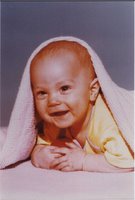
    To Jonathan Michael Murphy (whatever your name is now), born on November 26, 1975 (though your date of birth may have been changed on your amended birth certificate), at Fairbanks Memorial Hospital in Fairbanks, Alaska (your place of birth may have been changed, too): your birthmom and half-brother James are most anxious to meet you! This is what you looked like as a baby:

    More LDS birthmother accounts


  • Drugged by Thorazine

  • Unlicensed LDS Social Worker

  • Marshall Islands Mothers Victimized by Utah Predators!

    Utah adoption brokers don't limit their procurement activities to within the U.S. borders. Until their activities were halted by Marshall Islands legislators, adoption predators were flying mothers-to-be from the Marshall Islands to Hawaii to deliver their babies there for export to the United States - primarily Utah - for adoption. The stop in Hawaii circumvented both immigration requirements (the baby was automatically a U.S. citizen) and the required approval of the adoption by Marshallese courts. These women of extreme poverty hadn't a clue what was really happening to them and their babies. They understood neither the language nor the concept of closed adoption (in their culture, adoptees are free to return to visit their birth parents as adults.)

    Read the whole Marshall Islands article series - start with this website and follow its links:
  • Harvest of Babies from the Marshall Islands Subject of New Series


  • From another source, Hawaii Star-Bulletin, Friday, March 5, 2004, Adoption practice draws concern

    Marshallese women have their babies here, then put them up for adoption by Americans

    Despite increased scrutiny from authorities, adoption agencies are continuing to flout Marshallese law by bringing late-term pregnant women from that country to Hawaii and other states so the newborns can be adopted by U.S. families, officials said yesterday.

    A healthy Marshallese baby can cost the adopting family as much as $40,000.

    Although the number of adoptions each year is believed to be small, the practice has been widely condemned because it circumvents Marshallese law, and the birth mothers generally do not understand that they are giving up their children for good, according to federal authorities and other officials at a video conference called yesterday by U.S. Rep. Neil Abercrombie to discuss the problem.

    Also, the practice often seems to involve fraud or deception, not only victimizing the birth mothers, but also state and federal agencies, hospitals and other organizations, the officials said.

    As recently as last month, hospitals in Hawaii handled births of Marshallese babies destined to be adopted, and a small group of pregnant women from the tiny, impoverished Western Pacific nation was expected to arrive in Hawaii today, bound for Utah, the officials said.

    Abercrombie (D-Urban Honolulu) invited representatives from law enforcement agencies, health care providers, advocacy groups, the Marshallese government and other organizations to the conference, linked by video between Honolulu and Washington, D.C.

    While the agreement governing relations between the two countries prohibits a Marshallese child from traveling to the United States to be adopted without meeting immigration and other requirements, it is not clear whether that provision applies to pregnant Marshallese women.

    But under Marshallese law, the adoption of any child by a foreign resident must be approved by that island nation's court. Officials said adoption agencies arrange to bring the birthing mothers to Hawaii to circumvent that law.

    Beyond the legal issues, the birth mothers usually do not understand the full ramifications of a U.S. adoption, and once in Hawaii they become completely dependent on the adoption agency, which houses them, arranges for transportation and medical services, provides translators, takes their passports and essentially controls their lives, several conference participants said.

    "They're basically held hostage," said Kristine Nicholson, president of Hawaii International Child, a state-licensed nonprofit adoption agency which has not arranged any Marshallese adoptions.

    But Linda Lach, a Kauai attorney who has arranged such adoptions, cautioned against portraying all people in the industry with the same broad stroke.

    As in any industry, there are unethical people involved with Marshallese adoptions, but "we can't all be tainted with the same brush," said Lach, who was not at the conference. She said the adoptions she handles are done properly, and the birth mothers clearly understand what they are doing.

    Officials at the conference said that when questions are raised about suspect practices, the adoption agencies simply move the birth mothers to different locations around the state and switch hospitals.

    The state attorney general's office is investigating whether Medicaid fraud has been committed by some agencies. Among other issues, the office is investigating whether the agencies are collecting money from the adopting families for the birth mothers' medical expenses while enrolling the women in Medicaid, putting the state on the hook for those bills.

    The Legislature also is weighing in on the adoption issue. A bill that would prohibit Hawaii courts from approving any Marshallese adoptions that have not received the go-ahead of that country's court system was passed yesterday by the Senate Judiciary Committee. It goes to the full Senate for a vote.

    Whatever is done to tackle the problem, authorities said that the organizations that may be benefiting from a criminal enterprise - not the mothers exploited by it - should be the target of law enforcement.

    "What we have to find is who is behind it," said Michael Seabright, assistant U.S. attorney in Honolulu.


    In response to the above article, an editorial in the March 7, 2004 Honolulu Star-Bulletin, entitled 'Stop Illegal baby trafficking from Marshalls' says:

    While poverty might seem to induce the mothers to give up their babies to receive the payment of as much as $100 a week while pregnant, Roby (Brigham University professor) found that most did not comprehend the permanence of adoption. Nearly 90 percent said they would not have agreed to the adoptions if they had known their children would not return to the Marshalls upon becoming adults.
  • Stop trafficking


  • Although no Utah adoption brokers were mentioned by name in the Star-Bulletin article or subsequent editorial, one is mentioned in the baltimoresun.com on November 2, 2003: One facilitator active in the islands is Sara Maun, who works with Noah's Ark Adoptions, a for-profit corporation licensed in Utah. Another agency is mentioned in a follow-up article, which follows: LDS Family Services (which, we know, is based in Utah).

    LDS Involved in Marshall Islands Child Procurement


    An article in the Baltimore Sun on November 3, 2003, entitled A birthmother alleges coercion, describes the activities of Sara Maun, the Marshallese adoption procurer mentioned in the previous piece: Maun said she has arranged about 80 adoptions over the past five years and now works with Noah's Ark and LDS Family Services, which is affiliated with the Mormon church. She said she collects a fee of $750 for each adoption.

    Quite the company LDS was keeping in its Marshall Islands infant procurement activities – shoulder to shoulder with a woman who had been investigated for running an unlicensed adoption agency and now was operating for profit!
  • You can read the entire Baltimore Sun article here:


  • Marshall Islands boot out all but one agency


    As a result of the activities of agencies like the two mentioned above and others, the Marshall Islands put a stop to predatory adoption activity by establishing a Central Adoption Authority which now controls adoption of its infants. In addition, effective March 1, 2004, only one U.S. adoption agency has been licensed to facilitate international adoptions from the Marshall Islands: Journeys of the Heart, of Hillsborough, Oregon. Journeys of the Heart has been selected because it is accredited by the U.S. Council on Accreditation (COA), in lieu of accreditation by the Hague Convention (which has yet to be ratified by the U.S.)
  • Countil on Accreditation
  • Journeys of the Heart


  • Notice that LDS Family Services, which is reported to have been active in facilitating international adoptions in the Marshall Islands prior to the shake-up, was not selected to continue. That comes as no surprise. LDS with its 56 satellite offices throughout the U.S. is not a COA-accredited agency. This is significant, given this blurb from the website of National Council For Adoption, of which LDS is a long-time member:

    NCFA Continues to Grow in its Leadership Role as "Global Ambassador" for Adoption There is a growing need and opportunity for NCFA to advocate adoption, both domestic and intercountry, around the world. With its excellent reputation and expertise, and its mission of adoption advocacy, rather than membership interests, NCFA is uniquely positioned to lead in this way.
  • National Council For Adoption

  • Lead in this way? If other nations take a cue from the Marshall Islands and begin requiring COA accreditation of U.S. agencies seeking to facilitate international adoptions, NCFA will have some scrambling to do. At the moment, only five of its member agencies (together with their satellite offices) are listed on the COA website as being accredited, despite NCFA's boast that it is a "sponsor" of the Council on Accreditation.

    As for the Marshall Islands, they have successfuly rooted out the adoption predators through legislation. So has the state of Illinois here in the U.S. But much more work needs to be done in other states - including yours! Will you help?

    Saturday, November 05, 2005

    National Council For Adoption (NCFA) Calls for ICPC Reform

    Before you express relief at the prospect of gaining better protection from predator agencies from Utah and perhaps other states through strengthening of the ICPC mandates, you need to know that NCFA's recommendation is not for strengthening but weakening the Compact. On page 7 of NCFA's Silver Anniversary National Adoption Report, NCFA lays out its 'Adoption Policy Agenda 2005.' The agenda's intro says:

    "NCFA will lead efforts during the 109th Congress to inform lawmakers about a number of pro-adoption policies, including:......The importance of limiting applicability of the Interstate Compact for the Placement of Children to adoptions out of foster care. The ICPC interferes unnecessarily with private adoptions; there is sufficient regulation of adoption agencies and others facilitating non-public adoptions. The American Public Human Services Association will soon recommend changes to the ICPC's application......"

    Thankfully, despite NCFA's attempt, "private adoptions" have been retained in the Compact rewrite process. In fact, the Development & Drafting Team established a Subcommittee on Private and Independent Adoptions to draft recommendations for changes to the Compact pertaining to those specific interstate placements.

    For shame, NCFA!
    For shame for advocating Compact changes that would almost certainly result in Baby Tamia-types of predation throughout our nation; for attempting to undermine the effectiveness of a Compact established to protect vulnerable birth and adoptive families throughout the U.S.; for proposing a change to the Compact that would have rendered individual states' protective adoption laws impotent, reduced, in effect, to those of the lowest common denominator – Utah?

    Current ICPC regulations protected Baby Tamia and her family – as determined in a court of law. Unfortunately, however, loopholes in the proposed ICPC revision may not provide the same protection in cases like Baby Tamia's. Therefore, we need to commit ourselves to strengthening adoption laws in our individual states, following the lead of Illinois, to protect our citizens in matters of interstate adoptions.

    NCFA Honors Utah and LDS Family Services

    This is incredible! Before this blog is even completed, The Adoption Digger has learned that the National Council For Adoption (NCFA) has inducted LDS Family Services in Utah into its self-proclaimed "Adoption Hall of Fame."

    In an article published in the December 6, 2005, online issue of The Salt Lake Tribune, NCFA spokesman Lee Allen credited LDS with being responsible for drafting many of Utah's "adoption-friendly" laws. LDS Family Services has been "an extremely active, influential and positive force in adoption nationally, promoting best practices," according to Allen.

    NCFA spokespersons acknowledged the recent Baby Tamia case, as well as the accusation by critics that Utah was a "baby warehouse." However, continues the article, "Adoption council President Thomas Atwood has a different perspective. Though unscrupulous agencies exist, Atwood says Utah and LDS Family Services serve as national models for protecting the "best interests of children." He added, "I would call it a pro-adoption state."
  • Read the entire article here:


  • If LDS Family Services is a "national model" as an adoption agency:

    1. Why isn't it accredited by the Council on Accreditation (COA), of which NCFA is a sponsor?

    2. Why does it not comply with the Interstate Compact on the Placement of Children (ICPC)?

    3. Why has it not taken a pro-active stand in rooting out the "unscrupulous agencies" referred to by Atwood? One would think that an agency which promotes "best practices" in adoption would be involved in cleaning up its own state's reputation for being an 'adoption warehouse.'

    And if Utah is so "adoption-friendly":

    1. Why don't its adoption brokers trust other states to cooperate in proper placement of children across state lines? (Could it have anything to do with this statement by adoption agency attorney Richard Van Wagoner, "A mother might back out of the decision or make a commitment and not show up.......So, the paperwork ends up being completed on this end. This was a technical violation..."?)

    2. Why do brokers need to resort to devious tricks and pressure tactics to get mothers to surrender their infants?

    3. Why do Utah brokers advertise with only toll-free phone numbers - no addresses - in far-off states, making it appear they are local agencies, and then lure mothers who respond away from their families and local services in their own states?

    4. Why does Utah thumb its nose at other states' laws regarding the rights of birth fathers, deliberately undermining those laws over and over again? Why hasn't it cracked down on brokers who advise birth mothers to lie about birthfather status?

    5. Why don't brokers inform mothers-to-be of all the differences in adoption laws between their home states and those of Utah - not just the the one that short-circuits birthfathers' rights? For example, an Illinois mother would have 72 hours to consider her decision to relinquish after the birth of her child in her own state, compared to 24 hours in Utah.

    6. Why does it accept as legally-binding relinquishments that have been signed in hotel rooms, witnessed only by an agency representative (who may have coerced or even threatened the mother) and a hotel maid? Why not before a judge in a courthouse, witnessed by courthouse personnel or someone of the birthmother's own choosing?

    7. Why does it permit "for profit" agencies to operate there - baby selling, pure and simple?

    8. Why does it permit "tri-state" adoptions, which result in the circumventing of laws of not just one but two other states?

    9. Why does it permit agencies' stiffing of taxpayers (Medicare) and hospitals for birthmother delivery expenses, while collecting fat placement fees from adopters?

    10. But, most importantly, why does the state of Utah openly permit adoption brokers to "routinely" violate the International Compact on the Placement of Children? (Remember attorney Richard Van Wagoner's statement, ".... the practice is not a secret to the state"?)

    In praising Utah's adoption laws and policies, it would appear that NCFA has given its stamp of approval to all of the above.

    Aha! Now I get it! "Adoption friendly" has nothing to do with birthmothers or their babies!

    "Adoption friendly" means it's friendly to adoption brokers!

    Well, Utah, I have to admit: you deserve the title!

    This page is powered by Blogger. Isn't yours?